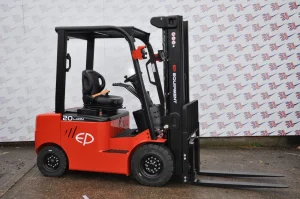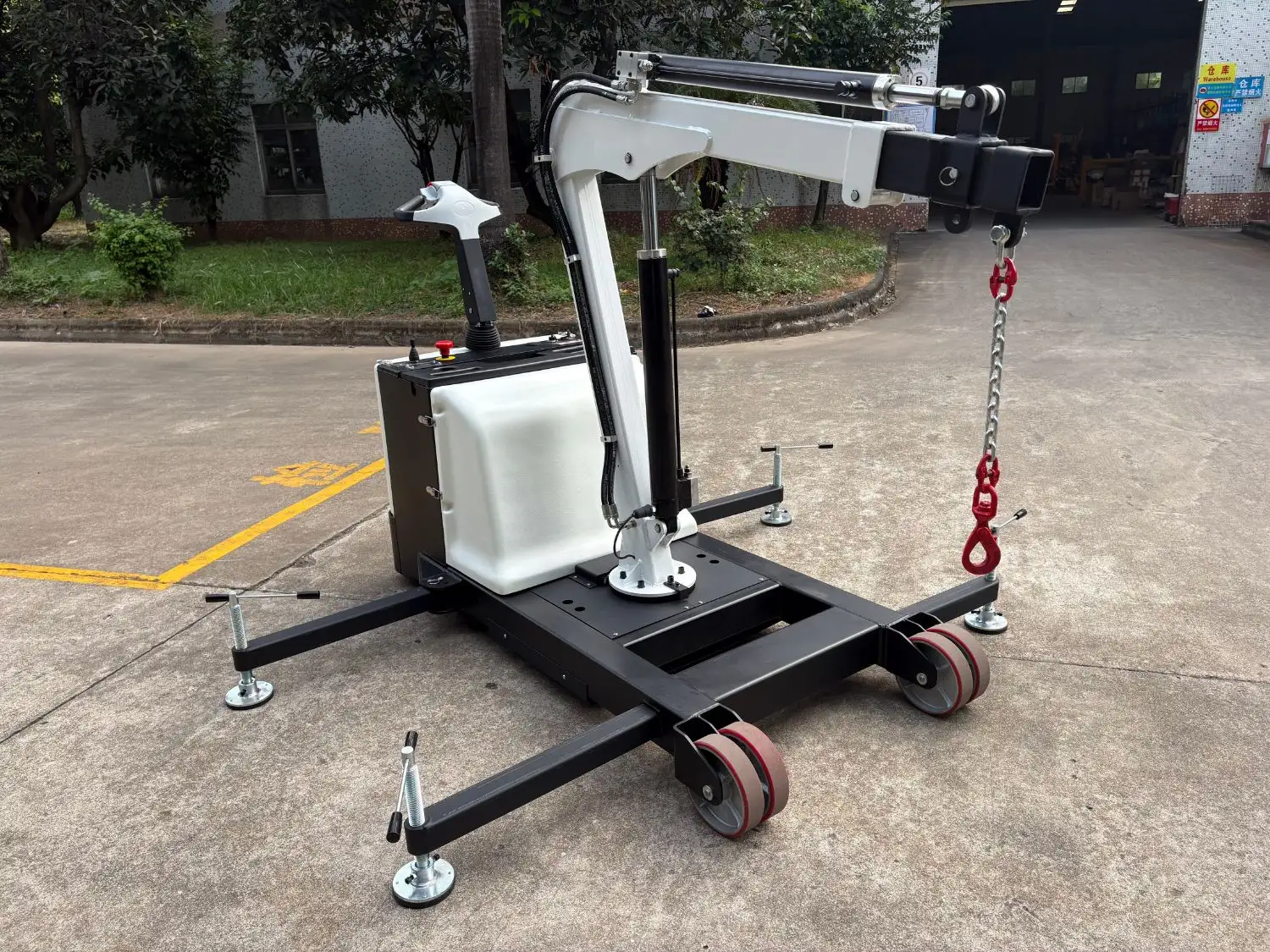
Quick answer: Pedestrian cranes (also called floor cranes or workshop cranes) are manually operated, low-cost lifting tools ideal for occasional use in confined spaces. Counterbalance cranes are mechanically or electrically powered, offering greater lift capacity, precision and repeatability, making them the preferred choice for regular industrial lifting tasks. The right option depends on your load weight, frequency of use, working environment, and budget.
If you work in a warehouse, workshop or manufacturing facility, chances are you have faced the debate: should you invest in a pedestrian crane or a counterbalance crane? On the surface, both pieces of equipment will help you lift and move loads, but dig a little deeper and the differences are significant.
Getting this decision wrong can cost you in productivity, safety incidents and equipment that simply does not do the job you need it to do.
What Is a Pedestrian Crane?
A pedestrian crane, sometimes referred to as a floor crane, workshop crane or hydraulic shop crane, is a manually operated lifting device designed for lighter-duty applications. The operator walks alongside the unit, controlling the lift and movement by hand.
Most pedestrian cranes are hydraulic-powered for the vertical lift, meaning you pump a handle to raise the load. Horizontal movement is performed by simply pushing the crane across the floor.
Pedestrian cranes are typically used for tasks such as engine removal and installation, machinery positioning and component handling in garages, workshops and smaller warehouses. They are compact, require no electrical supply and are very affordable to purchase and maintain.
Standard pedestrian cranes offer lift capacities ranging from around 500 kg up to 2,000 kg depending on the model, though they are most commonly used in the 500 kg to 1,000 kg range.
The main limitation of a pedestrian crane is that it relies on manual effort for horizontal travel. This means the operator must physically push the load across the floor, which can be tiring, imprecise and unsuitable for heavier or more frequent lifting requirements.
Where are Pedestrian Cranes Used Most?
- Vehicle workshops and garages for engine and gearbox changes
- Small manufacturing units with occasional heavy component moves
- Engineering and fabrication workshops
- Agricultural settings for equipment maintenance
- Maintenance areas within larger facilities
What Is a Counterbalance Crane?

A counterbalance crane is a fixed or mobile crane system that uses a counterweight to balance the load being lifted. This allows it to extend outward without tipping. Unlike a pedestrian crane, a counterbalance crane is typically powered electrically and is engineered for more demanding, repetitive lifting applications.
The defining feature is in the name: the counterbalance. By positioning a heavy counterweight at the rear or base of the unit, the crane can safely project the load outward from the column, providing far greater reach and control than a simple manual floor crane.
At Handling Equipment UK, our counterbalance crane range includes electric models designed for professional, day-to-day use in demanding industrial environments.
Counterbalance cranes are widely used in assembly lines, production facilities, loading bays and any environment where loads need to be lifted and precisely positioned on a regular basis. They can be wall-mounted, floor-mounted or jib-mounted depending on the application and many models offer 360-degree rotation for maximum versatility.
Where are Counterbalance Cranes Used Most?
- Production and assembly lines requiring repetitive precision lifts
- Warehousing and distribution centres for loading and unloading operations
- Metalworking and heavy engineering facilities
- Automotive and aerospace manufacturing
- Any facility requiring frequent, controlled lifting of loads between 100 kg and several tonnes
Pedestrian Crane vs Counterbalance Crane: Comparison
| Feature | Pedestrian Crane | Counterbalance Crane |
| Power source | Manual / hydraulic pump | Electric or semi-electric |
| Typical lift capacity | 500 kg – 2,000 kg | Up to 5,000 kg+ |
| Mobility | Operator pushes by hand | Powered travel (electric models) |
| Precision | Low to moderate | High |
| Best use frequency | Occasional / ad-hoc lifts | Regular / repetitive operations |
| Space requirements | Compact, flexible | Requires more defined working area |
| Operator fatigue | Higher (manual effort) | Lower (powered operation) |
| Initial cost | Lower | Higher (but better ROI long-term) |
| Maintenance | Minimal | Scheduled servicing required |
| Safe for confined spaces | Yes | Check model specifications |
Key Differences Between Pedestrian and Counterbalance Cranes
1. Lifting Capacity and Load Control
This is often the deciding factor. If you are regularly lifting loads above 1,000 kg or if precision placement is critical, a pedestrian crane simply will not cut it. The manual nature of horizontal movement makes accurate positioning difficult, particularly on uneven floors or when fatigue sets in over a long shift.
Counterbalance cranes, by contrast, offer controlled, powered movement and can handle significantly higher capacities with greater consistency. Our counterbalance cranes are built to handle demanding lift cycles without compromising on safety or accuracy.
2. Operator Effort and Workplace Ergonomics
Manual handling injuries are one of the most common workplace injuries in the UK and they are not limited to lifting boxes by hand. Pushing a loaded pedestrian crane across a warehouse floor puts real strain on shoulders, lower back and knees, especially over the course of a full working day.
For businesses looking to protect their workforce and meet their duty of care obligations, upgrading to a powered counterbalance crane is often a sound investment.
Powered counterbalance cranes significantly reduce the physical demands on the operator, improving both safety and productivity. Over the course of weeks and months, this translates into fewer sick days, better morale and a reduced risk of costly compensation claims.
3. Frequency of Use
This is a simple but important distinction. If you need to lift something heavy a few times a week in a workshop environment, a pedestrian crane might be perfectly adequate and cost-effective.
But if lifting and positioning is a core part of your daily operation, you need equipment built for that level of demand. Pedestrian cranes are not designed for continuous use and using them in high-frequency environments will accelerate wear, compromise safety and frustrate operators.
4. Working Environment and Space
Pedestrian cranes have the edge when it comes to flexibility in tight spaces. Their compact footprint and wheel-based mobility means they can be manoeuvred into areas that might not accommodate a fixed or semi-fixed counterbalance unit.
However, if your facility layout allows for it, a counterbalance crane can be positioned to cover a defined working zone with zero floor obstruction, which actually frees up more operational space in the long run.
What Are the Safety Considerations?
Both crane types must be operated in compliance with the Lifting Operations and Lifting Equipment Regulations 1998 (LOLER) and the Provision and Use of Work Equipment Regulations 1998 (PUWER). This means all lifting equipment must be thoroughly examined at regular intervals, operated by trained personnel and maintained in good working order regardless of whether it is a simple pedestrian crane or a powered counterbalance unit.
That said, the safety risk profile of each type differs meaningfully. Pedestrian cranes, because they rely on manual horizontal movement, are more susceptible to load swing, operator fatigue and tipping on uneven surfaces.
Counterbalance cranes, when correctly specified and installed, offer a more controlled and inherently stable lifting solution. The counterweight design actively works against tipping and powered controls reduce the risk of uncontrolled load movement.
Key tip: Always ensure your crane, whether pedestrian or counterbalanced, is rated for the maximum load you intend to lift, including any lifting accessories such as chains, slings or hooks. Never exceed the stated Safe Working Load (SWL).
Which Is More Cost-Effective in the Long Run?
The upfront cost of a pedestrian crane is undeniably lower. A basic hydraulic floor crane can be purchased for a few hundred pounds, whereas a quality electric counterbalance crane represents a more significant investment. But cost-effectiveness is about total cost of ownership, not just the purchase price.
When you factor in operator productivity, frequency of use, maintenance requirements and the potential cost of workplace injuries, a well-specified counterbalance crane often delivers a much stronger return on investment for businesses that rely on regular lifting operations.
At Handling Equipment UK, we also offer flexible finance options for businesses looking to spread the cost of their equipment investment, making it easier to get the right crane for your operation without a large upfront outlay.
How to Choose the Right Crane for Your Operation
Still not sure which way to go? Work through these key questions before making a decision:
- What is the maximum load weight you need to lift? If it regularly exceeds 1,000 kg or requires precision placement, lean towards a counterbalance crane.
- How frequently will you be lifting? Occasional use in a workshop suits a pedestrian crane. Daily or repetitive operations need a powered solution.
- What is your working environment like? Tight, irregular spaces may suit a pedestrian crane. Defined production zones are ideal for counterbalance cranes.
- How important is operator ergonomics? If you are looking to reduce manual handling risk, a powered counterbalance crane is the clear winner.
- What is your budget and ROI timeline? Consider the total cost of ownership, not just the sticker price.
If you are still uncertain, contact our expert team at Handling Equipment UK. We are happy to talk through your requirements and help you identify the right solution.
Frequently Asked Questions
What is the difference between a pedestrian crane and a counterbalance crane?
The difference between a pedestrian crane and a counterbalanced crane is that a pedestrian crane is manually operated by the operator. A counterbalance crane uses a counterweight to balance the load and is typically powered electrically, making it better suited to heavier, more frequent and more precise lifting operations.
Can a counterbalance crane be used in a small workshop?
Yes a counterbalanced crane can be used in a small workshop depending on the model and installation type. Wall-mounted or column-mounted counterbalance cranes have a relatively small footprint and can be very effective in compact working environments.
The key is to ensure the unit is correctly specified for the space, the floor loading is suitable, and the crane is installed and inspected in line with LOLER regulations.
Do I need a licence to operate a counterbalance crane in the UK?
There is no formal licence required specifically for countercrane operation in the UK, but operators must be competent, trained and authorised by their employer under PUWER. For any lifting equipment covered by LOLER, regular thorough examinations by a competent person are also mandatory.
How much does a counterbalance crane cost in the UK?
The price of a counterbalance crane varies depending on capacity, power type and configuration. Our cranes range from £1,800 TO £10,000+. Browse our counterbalance crane category for current availability and pricing.
What maintenance does a counterbalance crane require?
Counterbalance cranes should be inspected before each use by the operator, with a thorough examination by a competent person at least every 12 months in accordance with LOLER.